Tuesday, 24 June 2008

Robert Mugabe: Thoughts on Celtic Imagination No 8

SOME STARK FACTS ABOUT ZIMBABWE[MugabeAd.jpeg]

INFLATION

In 1987 inflation averaged 11.9 percent. It surged to an official record of 100,586 percent in January 2008, but economic experts say the real rate is much higher.

LIFE EXPECTANCY

Average life expectancy dropped from 63 years in 1990 to 37.3 years in 2005, according to World Bank and U.N. figures.

UNEMPLOYMENT

Estimated at about 80% of the working population.

ROBERT MUGABE

Lives in a palatial mansion and is addicted to power. Uses violence, brutality and coercion to achieve his aims.  

THE PEOPLE OF ZIMBABWE

The majority are hungry, disenfranchised and powerless to put an end to Mugabe's megalomaniacal tyranny.

OK. The last two categories are not facts, they are my personal opinions about the unfolding tragedy in Zimbabwe. I happen to believe that they reflect the truth of the matter. On his campaign poster Mugabe expresses opinions of his own. The call-out which proclaims "100% empowerment. Total Independence" is a sick joke right out of the pages of the dictators handbook. Mugabe's record in government itself, let alone the recent accounts of beatings, murders and rape, tell an altogether different and horrendous story. If he believes that "All good things are possible", then that is a truism reserved for himself and his political cronies and military thugs.

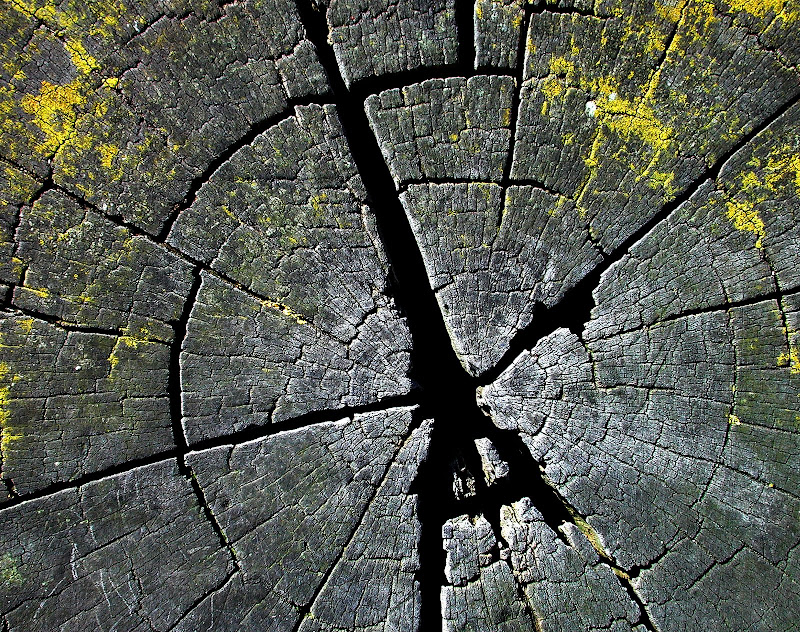
Paradoxically, the sooner Mugabe is gone and proper democracy is restored to Zimbabwe the sooner its people can begin to experience the reality of his campaign slogan. The picture of the mooring post is an apt metaphor for what has happened to Zimbabwe under his rule. Mugabe has failed utterly to care for and empower his people. This failure right at the centre has compromised the whole country and imperilled its people.
But look again at his poster. Are there some inconvenient truths here for Brits like me? When I was a lad I can remember looking at maps of the British Empire in books. Great swathes of pink coloured the map. It all seemed so natural and normal. In History Class we learned of the Indian Mutiny and the Black Hole of Calcutta. On television the violence in Northern Ireland was told from the normative perspective of us being at war with the terrorists of the IRA. As a child growing up I knew no better and my worldview reflected it. History was always one-sided and incomplete. A whole set of voices were missing. I can just recollect John Pilger's reporting from Vietnam striking a discordant note on our black and white TV. Voices and pictures from the underside of history started to tell a very different story about the world I took for granted. Gradually I came to see the story of Empire from an altogether less rosy viewpoint: that of the British Empire doing what Empires always do: conquer, exploit, oppress and subjugate native and indigenous peoples.

Try reading Irish History from the Republican perspective and it all looks very different. Take the interplay of landlordism, the potato famine and mass migration for example. To some Irish commentators this catastrophe of 'the great hunger' is nothing less than a 'managed genocide'. These are voices which we have needed to hear. The same applies of course to American history and the colonisation of North America. The French, Spanish and British all devasted the native peoples; it was left to the westward expansion of the white settlers in the late 19th century to finish the job. Films such as Dances with Wolves and  books such as Bury my Heart at Wounded Knee attempted in part to set the popular record straight, but the pace of revisionism can seem heartbreakingly slow. And what of Africa and the Middle East? As a palaeoecologist I knew that you could not make sense of the present without understanding the past. So as I condemn Mugabe I am tied inextricably to the colonial history of my own country and its imperial past. Mugabe has not only played on this, one could argue that he has been made by this history. The picture of the white guy in the pith helmet being carried by two Africans and Mugabe's facts about colonial rule reminds me of Desmond Tutu's sharp saying: "When the missionaries came to Africa they had the Bible and we had the land. They said "Let us pray." We closed our eyes. When we opened them we had the Bible and they had the land." As we hope and pray for Mugabe's removal from power I think it only honest that we recognise our complicity in so many of the world's political dilemmas.

Open source Christianity and the blogosphere

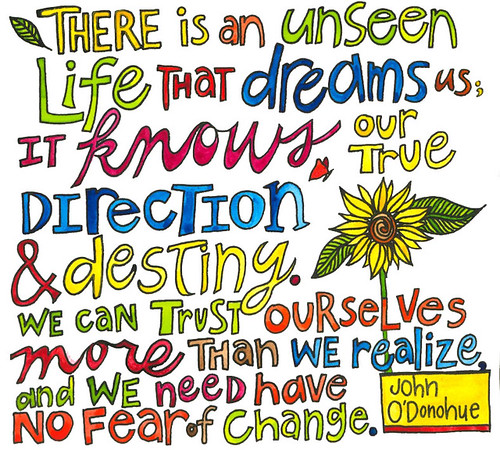
Thanks to Tony Jones in his superb book on the phenomenon of the Emergent Church Movement, 'The New Christians', I have just discovered Bob Carlton's blog and this refreshingly perceptive and honest post on men in leadership in the church, and the neglected testimony of women.  And thanks to Bob Carlton I have just discovered the blog and artwork of Jen Lemen, and re-read this lovely quote from John O'Donohue, one of my favourite writers.

unseen life

A sentence read in a book, a quick Google and a couple of mouse clicks and my soulspace has been expanded and enriched, all inside 10 minutes. This is the reality of open-source Christianity and the blogosphere. Tony Jones explores this theme at depth, emphasizing that "Emergents believe that church should function more like an open-source network and less like a hierarchy or a bureaucracy." He cites Wikipedia as a good example of this, with anyone able to edit the content in such a way that it is the community itself which produces the text we read on the screen collectively and collaboratively, rather than it coming from a single authoritative source.

In a Wiki model of church the people do theology together, do liturgy together (lit. the work of the people) and transform their communities by living 'beautiful Christianity' together: "Emergents firmly hold that God's Spirit - not their own efforts - is responsible for good in the world. The human task is to co-operate with God in what God is already doing."  Of course such open-source statements as "Emergents downplay - or outright reject - the differences between clergy and laity" threaten hierarchical, status-bound institutional churches - and thank God for that. As I prepare to go to the Methodist Conference in Scarborough next week, this sublime quote from Tony Jones is a God-gift:

"Lillian Daniel is a pastor in the United Church of Christ, a notoriously left leaning denomination founded in 1957.She's also active in the labor movement and an outspoken proponent of progressive causes - a passionate person. Reflecting on the biannual General Synod national meeting, she moaned, 'We used to be a group of revolutionaries.  Now we're a group of resolutionaries.'  Operating by a distinctively non-biblical Robert's Rules of Order, she said the convention has devolved into a gathering of persons who read resolutions that are then voted on and promptly forgotten.  The resolutions range from those for gay marriage to those against gay marriage, from a call to study the imprisonment of native Hawaiians to 'saving Social Security from privatization.' The resolutions pile up; and then they're read, seconded, discussed, voted on, and filed.'  Lillian thought she was joining a movement, but she was joining a bureaucracy.  And that bureaucracy tends to squash the passion of many Christ-centered and enthusiastic persons therein."  (The New Christians pp. 9-10)

There is a beautiful, messy godly simplicity to re-discovering church not as an institution bound to buildings and resolutions but as a transformative and revolutionary community of disciples. Disciples for whom parity of esteem and mutual respect and living out kingdom of God lives as followers of Jesus, are key. Have a look at a sample of Shane Claiborne's writing to get a flavour of what this approach feels like.  Bob Carlton has this lovely quote from him: "I see an entire generation of young people who want a Christianity they can wrap their hands around.  They don't want to just believe stuff. They're saying if you want to know what I believe, then watch how I live." If this sort of thinking floats your boat get a copy of Tony's book. In an open-source church we share the insights we have discovered, we are enriched by one-another and we are open to God's Spirit, continually weaving fresh patterns of meaning and hope in the midst of life.

So to another gift from Bob Carlton's blog, the poem 'teach us a new language' by Cheryl Lawrie, project worker for the Hold This Space alt.worship project in Australia.

We are trying, God,
and we are angry that the world will not listen
when we try to speak of you,

yet deep down
we acknowledge that we no longer have the words
that speak of who you are
and all you have done.

While we know it is no sin to be speechless,
we must confess that we have stopped looking.

Teach us a new language, God -
one of wild imagination and courageous vision -
so we can begin to tell a new story
that will unfold your ageless plot of freedom
liberation
and grace
to a world longing to hear.
A story that will speak of hope with the turning of each page.
A story that you promise has no ending but love

Coping with stress: thoughts on Celtic Imagination No 7

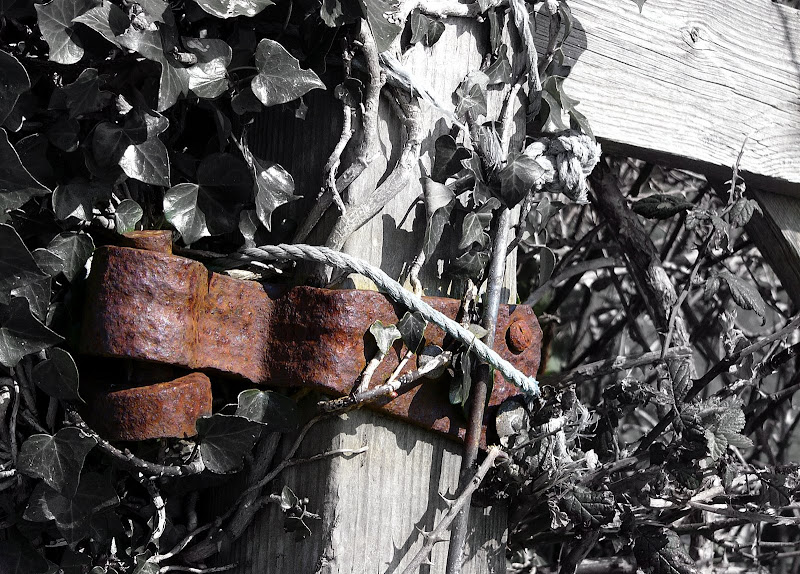
This image works for me on many levels. As someone with a busy, demanding job I recognise the feeling of being under continual pressure, of holding the weight of difficult issues and situations for prolonged periods of time. On several occasions I have learned the hard way how such unremitting stress has a nasty tendency of catching up with me. I know what it feels like to be off work and just another statistic in time lost to the British economy through stress-related illness. After the last such episode I decided to do something positive to break the cycle.

Whilst on sabbatical in 2006 I had read some of Zen Master Thich Nhat Hanh's books and was attracted to his practice of mindfulness. A quick Google search soon turned up the fact that these techniques had been introduced to medicine as a way of reducing stress and improving wellbeing. I discovered the work of Jon Kabat-Zinn, the founder of the 8 week course in mindfulness based stress reduction (MBSR) at The Center for Mindfulness at the University of Massachusetts Medical School, and read his book Full Catastrophe Living. He speaks about MBSR in this video from the University of California San Diego Center for Mindfulness, which is well worth a look if you are interested in exploring mindfulness for yourself. A much shorter introduction to what MBSR is about is the excellent book Heal Thyself by Saki Santorelli, one of Kabat-Zinn's colleagues.

All of this reading was like becoming aware of the smell of fresh bread; you just have to taste some for yourself. Thankfully it is possible to take the 8 week course in MBSR via distance learning in the UK. I signed up for the one offered through the Centre For Mindfulness Research And Practice at the University of Bangor. This involves daily home practice and a weekly 45 minute phone call with a tutor, with an optional day of silent practice in Bangor for everyone on the course. Put simply, it has changed my life. But be warned; the course opens up all sorts of painful self-awareness, not least of our automatic ways of coping with stress and deep-seated and unhealthy patterns of thinking and negative self-talk. Yet the essence of mindfulness is that it cultivates a freeing non-judgemental awareness. In my experience it brought the promise of Jesus alive: and you will know the truth, and the truth will make you free (John 8:32).

Anywhere at anytime I can simply focus on my breathing and be myself in the present moment. It feels rather like immersing myself in a warm bath and relaxing deeply.  If situations get tough and unpleasant it is simplicity itself to use the 'three minute coping with difficulty breathing space'.  Living in the present moment, giving attention to the present moment, being aware that thoughts are not facts and being gentle and non-judgmental when negative self-talk arises  has transformed the quality of my life. I now cope with stress and truly feel that the rusty hinge won't fail.

In Christian terms MBSR has led me to experience in the most profound way what it is to be still, and know the healing and delightful presence of God in each moment. The serenity prayer of Reinhold Neibuhr really does come alive when we practice moment-by-moment awareness.

God grant me the serenity to accept the things I cannot change,
courage to change the things I can,
and the wisdom to know the difference.

Friday, 20 June 2008

Celtic Imagination No 11

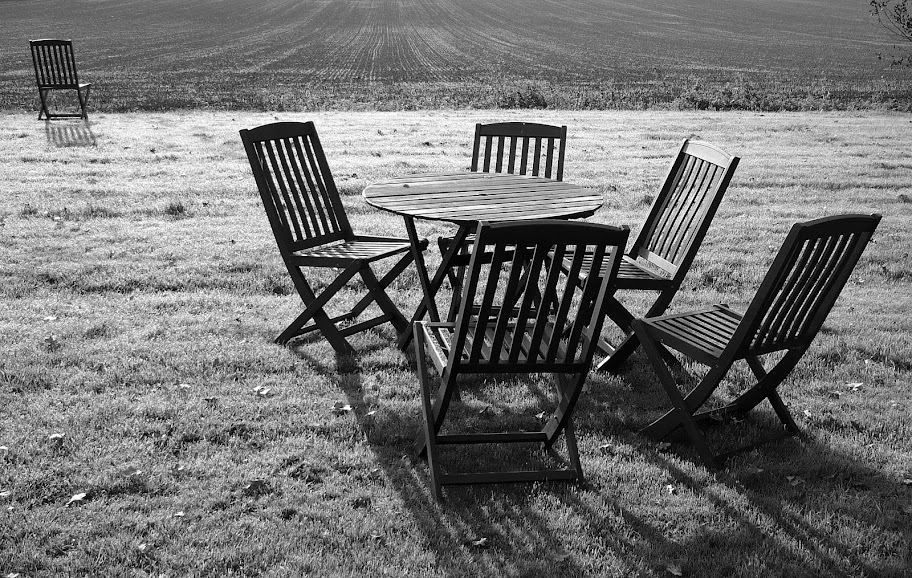
A simple composition which might lead to you to reflect upon such themes as inclusion and exclusion, acceptance and rejection, intimacy and solitude.

 Hothorpe Hall, Leicestershire

Celtic Imagination No 10

A more sombre image to dwell with.This photograph was taken in the churchyard at Howarth, West Yorkshire, adjacent to the Bronte Parsonage Museum. The inscriptions point to interwoven stories of death and dying, grieving and loss within one family.  The earliest death is recorded just two years after that of Charlotte Bronte. The leaves of the Horse Chestnut tree counterpoint the Victorian headstone.

Howarth

Friday, 13 June 2008

Celtic Imagination No 9

This photograph of a ladder stile was taken from the Ordnance Survey Trig Point on Black Crag, on a very hot day in bright, hazy sunshine. I find it a very imaginative image to work with. The wall blocks the path, which carries on into the middle distance. Climbing over the stile is the only way to get to the other side. The second step up  is missing, as is a plank on the top platform. The 'usual' walking routes turn back at this point; there is no finger post to say where the path leads, so this is a significant boundary to cross.  The dramatic scenery of the far horizon beckons the viewer. If you are fit and healthy you might want to climb over and explore, but what if you are not, or if you have small children or a dog? What can you draw out from this image about boundaries and barriers?

Ladder stile on Black Crag, near Tarn Hows in the Lake District.

Celtic Imagination No 8

This photograph shows the top of a wooden mooring post in Weymouth Harbour. Long exposure to sunlight, rainfall, salt-laden air, extremes of temperature and the formation of ice crystals in the depths of winter has taken its toll. The structural detail of the wood has opened up and the strength of the post is compromised by failure right at the centre.

How does this image speak to you?

Weymouth Harbour, Dorset

Tuesday, 10 June 2008

Snide and Prejudice: thoughts flowing from Celtic Imagination No 6

This photograph of pebbles on Chesil Beach is meant to be suggestive of diversity and difference. My imaginative thinking about this one runs like this. Simply desaturating the image and then adding colour selectively draws your attention to three of the pebbles in particular. If you were looking down, which out of all of these stones would you pick up? Especially important is the next question - why? If we disregard colour, the stone in the centre is most dissimilar to the rest, being larger and much flatter in profile, but it is those three coloured stones which grab our initial attention. Yet they are only different to the rest; they are not intrinsically better or superior to the others. Quite deliberately the photograph plays with our value-judgements and perceptions. For me it begs all sorts of sociological questions about the mechanisms which shape stereotyping, racism, and issues of inclusion / exclusion. We might pause to reflect upon just how complex is our 'simply seeing' of  one another. It is anything other than straightforward.

Now look at the original photograph. The three coloured stones become unremarkable amongst many similar ones. A geologist might well be drawn to pick up a particular pebble because of it's relative rarity in this location. Someone keen to skim a stone on the water might go for the flat one. Unlike the modified image, however, your response is not being skewed or influenced by me.

Clearly there are many ways in which we filter and judge what we see. At one level these are all just stones, yet our evolutionary neurobiology is such that we filter, order, pattern, categorise and rank without having to think about it. Trapping out our instant reactions to things or other people in terms of our attitudes, preferences or prejudices can be very revealing. How we come to have them in the first place is an altogether more disturbing question. For instance, how has our seeing of one another changed post 9/11 and 7/7? More worryingly, who manipulates the way we see and why? One thing is for sure: it has changed, and not for the better. And yet our collective ways of seeing one another can and do change for the better. Forty years on from the civil rights protests and the assassination of Martin Luther King Jr, the people of America stand on the threshold of an historic choice. For the first time in their history an African-American is on the Presidential Ticket. That this particular fact about Barack Obama has been the focus of so much comment, in much the same way as has Hillary Clinton's gender, shows both how far we have collectively come and how far we still have to travel.

So, with apologies to Jane Austen devotees, 'Snide and Prejudice' seems to be a good tag-line for this post. Both terms relate to attitudes and behaviours which are rooted in how we see each other. I chose 'Snide' ("expressive of contempt, derogatory in a malicious, superior way") and 'Prejudice'  ("an adverse judgment or opinion formed beforehand or without knowledge or examination of the facts; an irrational suspicion or hatred of a particular group, race, or religion.") because these are characteristics which we can trap out and change. We can also ponder how we came to have them in the first place and seek to address those sociological mechanisms too. This is exactly what we see Jesus doing in his dealings with the religious and political establishment of his day. He sees people in a very different way to them. He challenges their value-system and, through his words and actions, subverts and transforms it.

In his perception all pebbles are equally valuable.

Monday, 9 June 2008

Celtic Imagination No 7

One of a pair of rusty hinges on an old five-bar gate. Over time the stresses had proved to be too much. The lower hinge had almost failed and most of the load was now being taken by this one. What power does this metaphor have for you and why?

Saturday, 7 June 2008

Masks: thoughts flowing from Celtic Imagination No 4

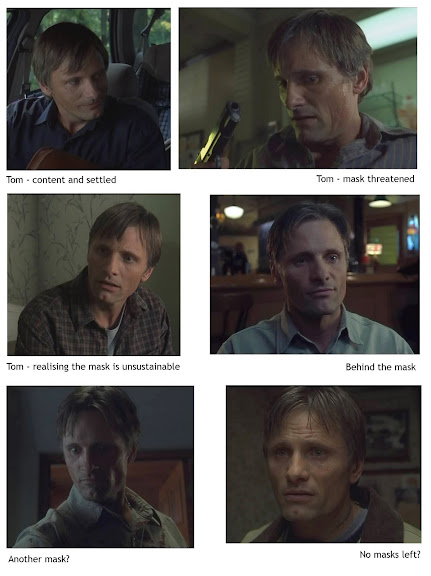
I greatly admire the films of Canadian director David Cronenberg. With searing honesty he explores the human psyche in a manner which almost always means that masks are peeled away and the messily conflicted nature of what it is to be human is revealed. His partnership with actor Viggo Mortensen has produced two of the outstanding films of recent times; A History of Violence and Eastern Promises. In both of these films Mortensen's work is of the very highest calibre. In A History of Violence he gives a virtuoso performance of great depth and subtlety as a man whose mask is threatened by circumstances beyond his control. Outwardly his character, Tom Stall, is a picture of contentment; he has a loving family and is at the heart of his small-town community. But his personal idyll is not all that it seems, as beneath this mask of outward appearances there is a deeper truth to Tom. The narrative in 'A History of Violence' develops around the revealing of this truth when the mask is torn away and another facet of Tom's being comes to the surface. At the end of the story we are left looking at Tom who seems finally to have no masks left. His soul is bared and vulnerable. The screencaptures show this process as it unfolds and hint at the superb quality of Viggo's achievement in this role.

As I reflect on this I am drawn ever more deeply to a verse in St.John's gospel which seems to me to speak right into the heart of the matter of the masks we wear:  Jesus says "you will know the truth, and the truth will make you free" (8:32) This is not a glib promise. Nor is what he offers comfortable. Far from it. The final picture of Viggo in the sequence opposite pretty much evokes what the process of coming to know one's deepest truth can feel like. But it is there, right at that point of vulnerable anguish freed of our masks that some other words of Jesus can birth new life:  "I came that they may have life, and have it abundantly." (John 10:10). With this in mind I offer you the words of a poem which I first came across in my work as a prison chaplain.

Please Hear What I'm Not Saying
"Don't be fooled by me. Don't be fooled by the face I wear for I wear a mask, a thousand masks, masks that I'm afraid to take off and none of them is me. Pretending is an art that's second nature with me, but don't be fooled,for God's sake don't be fooled. I give you the impression that I'm secure, that all is sunny and unruffled with me, within as well as without, that confidence is my name and coolness my game, that the water's calm and I'm in command and that I need no one, but don't believe me. My surface may be smooth but my surface is my mask, ever-varying and ever-concealing. Beneath lies no complacence. Beneath lies confusion, and fear, and aloneness. But I hide this. I don't want anybody to know it. I panic at the thought of my weakness exposed. That's why I frantically create a mask to hide behind, a nonchalant sophisticated facade, to help me pretend, to shield me from the glance that knows. But such a glance is precisely my salvation, my only hope, and I know it.That is, if it is followed by acceptance, If it is followed by love. It's the only thing that can liberate me from myself from my own self-built prison walls from the barriers that I so painstakingly erect. It's the only thing that will assure me of what I can't assure myself, that I'm really worth something. But I don't tell you this. I don't dare to. I'm afraid to. I'm afraid you'll think less of me, that you'll laugh, and your laugh would kill me. I'm afraid that deep-down I'm nothing and that you will see this and reject me. So I play my game, my desperate, pretending game with a façade of assurance without and a trembling child within. So begins the glittering but empty parade of Masks, and my life becomes a front. I tell you everything that's really nothing, and nothing of what's everything, of what's crying within me. So when I'm going through my routine do not be fooled by what I'm saying. Please listen carefully and try to hear what I'm not saying, what I'd like to be able to say, what for survival I need to say, but what I can't say. I don't like hiding. I don't like playing superficial phony games. I want to stop playing them.I want to be genuine and spontaneous and me but you've got to help me. You've got to hold out your hand even when that's the last thing I seem to want. Only you can wipe away from my eyes the blank stare of the breathing dead. Only you can call me into aliveness. Each time you're kind, and gentle, and encouraging, each time you try to understand because you really care, my heart begins to grow wings -- very small wings, but wings! With your power to touch me into feeling you can breathe life into me. I want you to know that. I want you to know how important you are to me, how you can be a creator--an honest-to-God creator -- of the person that is me if you choose to. You alone can break down the wall behind which I tremble, you alone can remove my mask, you alone can release me from the shadow-world of panic, from my lonely prison, if you choose to. Please choose to. Do not pass me by. It will not be easy for you. A long conviction of worthlessness builds strong walls. The nearer you approach me the blinder I may strike back. It's irrational, but despite what the books may say about man often I am irrational. I fight against the very thing I cry out for. But I am told that love is stronger than strong walls and in this lies my hope. Please try to beat down those walls with firm hands but with gentle hands for a child is very sensitive.

Who am I, you may wonder?  I am someone you know very well.
For I am every man you meet and I am every woman you meet
."


By Charles C. Finn

Friday, 6 June 2008

Celtic Imagination No 6

In Celtic expressions of Christianity, God is to be encountered in all things. The world around us is profoundly sacred and through the openness of our creative imagination becomes a means of dialogue with God. Such a sacramental way of seeing is a gentle and reflective way of nurturing a more contemplative spirituality.

This time an image suggestive of diversity and difference.

Chesil Beach, Dorset

Celtic Imagination No 5

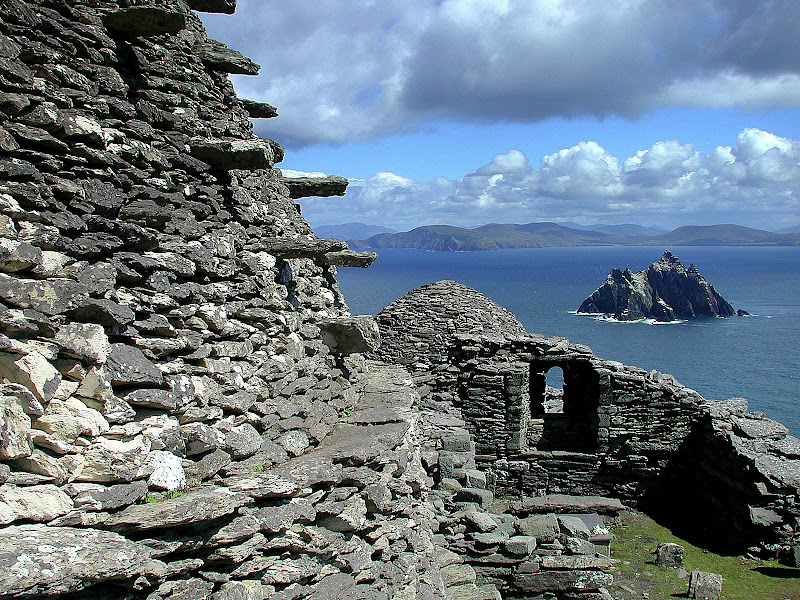
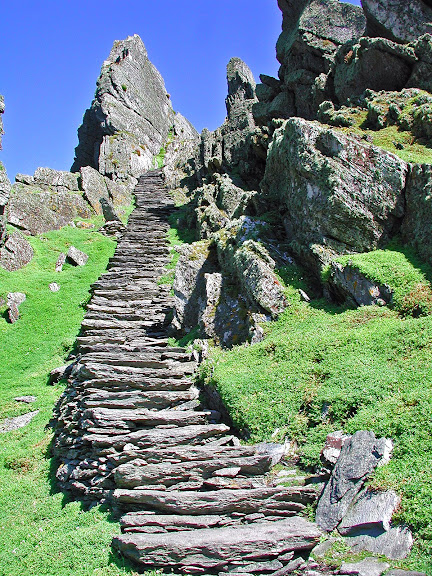
The Celtic monastery on Skellig Michael, Co Kerry, is a good subject for imaginative reflection.  Looking at the photographs questions such as 'Why was the monastery built here? What would life and faith have been like for the Irish Christian Monks who made their home here?' spring to mind. Of course the photographs also beg the question of gender exclusion: 'And what of the women's faith?' What does all of this say to you?


Thursday, 5 June 2008

Celtic Imagination No 4

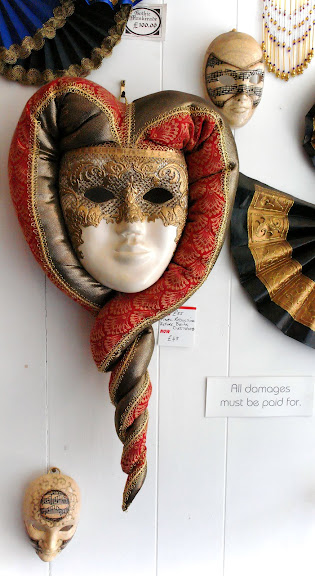
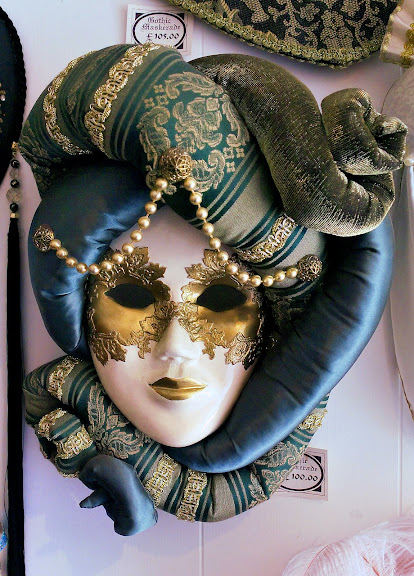
The theme of 'Masks' should stir-up our imaginations. What face do we show to the world? What is the truth behind the mask? How do others see us?

Decorative Masks, Castleton, Peak District

See this post for some thoughts arising from these images

Trapped: thoughts flowing from Celtic Imagination No 3

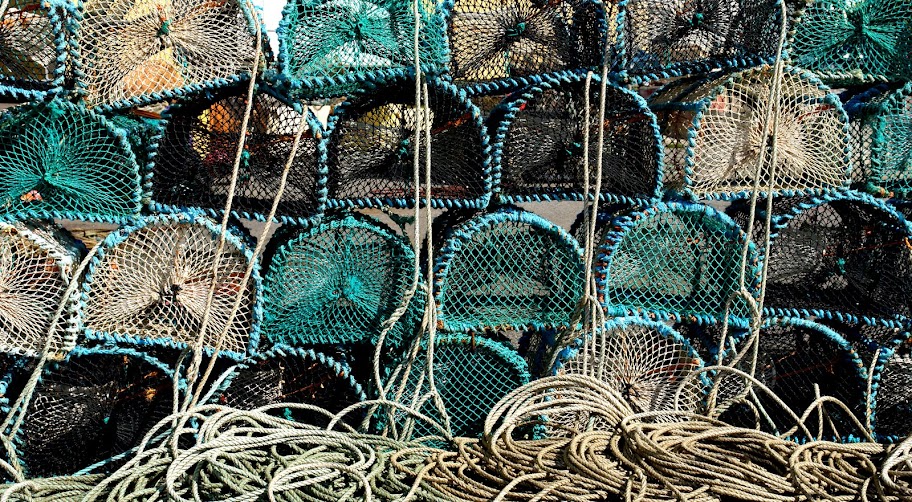
The image of lobster pots released a wellspring of reflection in my mind which I would like to share with you. In sitting with this image I was mindful that it is 200 years since the ‘Abolition of the Slave Trade’ Act. As we have recently bought the DVD of 'Amazing Grace' the life and faith-driven activism of William Wilberforce was fresh in my mind, hence the connection with the photo. I totally agree with the reviewer on Amazon who said of 'Amazing Grace', "I would place this film amongst the most powerful I have ever seen in a long life of cinema going." Its such a moving portrayal of what putting the kingdom of God into practice looks like and why, for Christians, inaction is not an option.

All of this led me to ponder the question, "who is trapped or enslaved today?" As I looked at the lobster pots three groups of people came into focus: migrant workers, prostitutes and people imprisoned and tortured for their political and religious beliefs.

In Lincolnshire our economy relies on migrant workers, with  peak demand for casual and temporary labour in South Lincolnshire and Boston reaching up to 15,000 migrant workers per day. Across the UK stories of how migrant workers are exploited and abused are all too common. Here in Lincolnshire we take a pro-active approach to these issues. Lincolnshire Chaplaincy Services employs a Migrant Workers Chaplain, who together with our Agricultural Chaplain (see Integration Lincolnshire), seek to address the main causes for concern. Local churches offer hospitality and seek to advocate the welfare and well-being of migrant workers in their communities, which for towns such as Boston is a pressing matter. We resolutely oppose racism in all its forms. What are the issues where you live? Who is trapped? Who is being exploited? What can you and your church do about it?

The second lobster pot group of people I thought about are those caught up in prostitution and sex-trafficking. David Cronenberg's powerful film 'Eastern Promises' deals with this. The media made much of a fight scene in a Turkish bathhouse involving the actor Viggo Mortensen naked.  The most chilling, provocative and harrowing scene in the film did not get a mention: that set in a brothel where a sex-trafficked Ukrainian woman is forced to have sex. Chaste (Churches Alert to Sex Trafficking Across Europe) is a very helpful resource for addressing the scandal of women trafficked and trapped in this way. Of course for many of the women trapped into street prostitution their plight is linked inextricably to drugs. Drug dealers and pimps enslave them. This video on Youtube shows the human face of this misery. It is so profoundly sad and almost unbearably moving. Each of these women is beloved and cherished by God, yet they are vilified and stigmatised by society in a way which traps them in a lobster-pot stereotype. How are they to know the love of God in a way which sets them free? What action can we take to support those who are vulnerable in this way?

The third group of lobster-pot people are the ones for whom Amnesty International exists, those imprisoned and tortured for their political and religious beliefs and actions. For a daily comment on what's in the news regarding human rights abuses take a look at this blog from the Amnesty International  UK media team. As Amnesty say of themselves: "We are ordinary people from around the world standing up for humanity and human rights. Our purpose is to protect individuals wherever justice, fairness, freedom and truth are denied."  This is something we can all get involved with.

So thinking about the theme of those who are trapped led me naturally to reflect upon the question, 'what can I do?' Channeling our righteous indignation and godly outrage is essential: as I have said before, being inactive is not an option for Christians.  Whatever lobster-pot people you thought about, there will be something you can do to set them free. For instance you could become a Backyard Abolitionist here in the UK, where you live and work, by taking to heart and putting into action the 'Not For Sale' campaign from the USA. Their blog flags up stories of local action from across the world. As they say:

"It is no longer enough to think about change.
It is no longer enough to talk about change.
It is time to shift gears; marrying movement with intelligent action.

Our collective challenge is simple, stand with those who are enslaved, work together to free them, and empower them in their freedom to break the cycle of vulnerability."

All of this from one picture of a row of lobster pots. Our imagination is a place where God can really get to work in our world.

Tuesday, 3 June 2008

Celtic Imagination No 3

A more challenging image this time. Perhaps this will trigger thoughts around what it is to be trapped or to be implicated as one who does the trapping, or maybe your imagination will stir around issues of oppression, exploitation or freedom. What might God have to say to you through the power of this image?

Lobster pots, Gairloch

Sunday, 1 June 2008

Celtic Imagination No 2

The second in a series of photographs to sit with and contemplate.

Hardraw Force, Yorkshire Dales