Friday, 13 June 2008

Celtic Imagination No 8

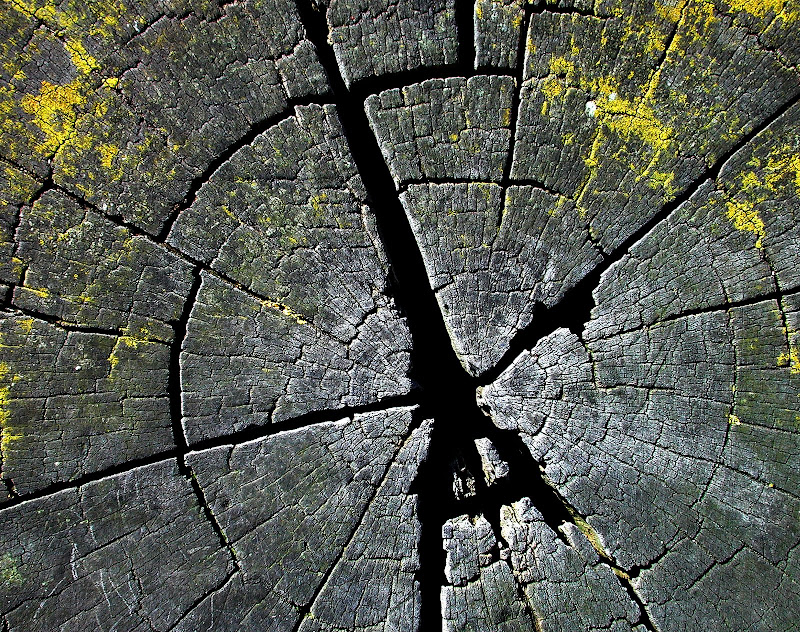
This photograph shows the top of a wooden mooring post in Weymouth Harbour. Long exposure to sunlight, rainfall, salt-laden air, extremes of temperature and the formation of ice crystals in the depths of winter has taken its toll. The structural detail of the wood has opened up and the strength of the post is compromised by failure right at the centre.

How does this image speak to you?

Weymouth Harbour, Dorset

Tuesday, 10 June 2008

Snide and Prejudice: thoughts flowing from Celtic Imagination No 6

This photograph of pebbles on Chesil Beach is meant to be suggestive of diversity and difference. My imaginative thinking about this one runs like this. Simply desaturating the image and then adding colour selectively draws your attention to three of the pebbles in particular. If you were looking down, which out of all of these stones would you pick up? Especially important is the next question - why? If we disregard colour, the stone in the centre is most dissimilar to the rest, being larger and much flatter in profile, but it is those three coloured stones which grab our initial attention. Yet they are only different to the rest; they are not intrinsically better or superior to the others. Quite deliberately the photograph plays with our value-judgements and perceptions. For me it begs all sorts of sociological questions about the mechanisms which shape stereotyping, racism, and issues of inclusion / exclusion. We might pause to reflect upon just how complex is our 'simply seeing' of  one another. It is anything other than straightforward.

Now look at the original photograph. The three coloured stones become unremarkable amongst many similar ones. A geologist might well be drawn to pick up a particular pebble because of it's relative rarity in this location. Someone keen to skim a stone on the water might go for the flat one. Unlike the modified image, however, your response is not being skewed or influenced by me.

Clearly there are many ways in which we filter and judge what we see. At one level these are all just stones, yet our evolutionary neurobiology is such that we filter, order, pattern, categorise and rank without having to think about it. Trapping out our instant reactions to things or other people in terms of our attitudes, preferences or prejudices can be very revealing. How we come to have them in the first place is an altogether more disturbing question. For instance, how has our seeing of one another changed post 9/11 and 7/7? More worryingly, who manipulates the way we see and why? One thing is for sure: it has changed, and not for the better. And yet our collective ways of seeing one another can and do change for the better. Forty years on from the civil rights protests and the assassination of Martin Luther King Jr, the people of America stand on the threshold of an historic choice. For the first time in their history an African-American is on the Presidential Ticket. That this particular fact about Barack Obama has been the focus of so much comment, in much the same way as has Hillary Clinton's gender, shows both how far we have collectively come and how far we still have to travel.

So, with apologies to Jane Austen devotees, 'Snide and Prejudice' seems to be a good tag-line for this post. Both terms relate to attitudes and behaviours which are rooted in how we see each other. I chose 'Snide' ("expressive of contempt, derogatory in a malicious, superior way") and 'Prejudice'  ("an adverse judgment or opinion formed beforehand or without knowledge or examination of the facts; an irrational suspicion or hatred of a particular group, race, or religion.") because these are characteristics which we can trap out and change. We can also ponder how we came to have them in the first place and seek to address those sociological mechanisms too. This is exactly what we see Jesus doing in his dealings with the religious and political establishment of his day. He sees people in a very different way to them. He challenges their value-system and, through his words and actions, subverts and transforms it.

In his perception all pebbles are equally valuable.

Monday, 9 June 2008

Celtic Imagination No 7

One of a pair of rusty hinges on an old five-bar gate. Over time the stresses had proved to be too much. The lower hinge had almost failed and most of the load was now being taken by this one. What power does this metaphor have for you and why?

Saturday, 7 June 2008

Masks: thoughts flowing from Celtic Imagination No 4

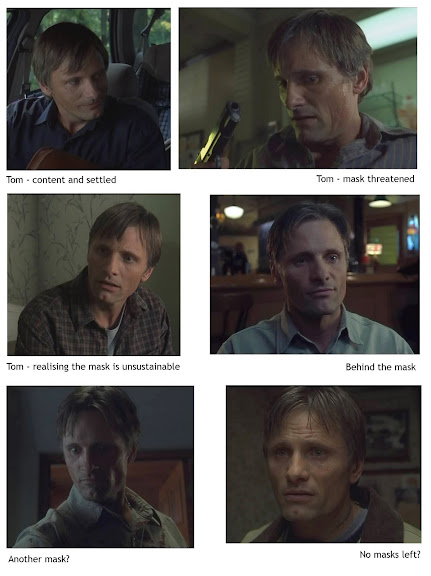
I greatly admire the films of Canadian director David Cronenberg. With searing honesty he explores the human psyche in a manner which almost always means that masks are peeled away and the messily conflicted nature of what it is to be human is revealed. His partnership with actor Viggo Mortensen has produced two of the outstanding films of recent times; A History of Violence and Eastern Promises. In both of these films Mortensen's work is of the very highest calibre. In A History of Violence he gives a virtuoso performance of great depth and subtlety as a man whose mask is threatened by circumstances beyond his control. Outwardly his character, Tom Stall, is a picture of contentment; he has a loving family and is at the heart of his small-town community. But his personal idyll is not all that it seems, as beneath this mask of outward appearances there is a deeper truth to Tom. The narrative in 'A History of Violence' develops around the revealing of this truth when the mask is torn away and another facet of Tom's being comes to the surface. At the end of the story we are left looking at Tom who seems finally to have no masks left. His soul is bared and vulnerable. The screencaptures show this process as it unfolds and hint at the superb quality of Viggo's achievement in this role.

As I reflect on this I am drawn ever more deeply to a verse in St.John's gospel which seems to me to speak right into the heart of the matter of the masks we wear:  Jesus says "you will know the truth, and the truth will make you free" (8:32) This is not a glib promise. Nor is what he offers comfortable. Far from it. The final picture of Viggo in the sequence opposite pretty much evokes what the process of coming to know one's deepest truth can feel like. But it is there, right at that point of vulnerable anguish freed of our masks that some other words of Jesus can birth new life:  "I came that they may have life, and have it abundantly." (John 10:10). With this in mind I offer you the words of a poem which I first came across in my work as a prison chaplain.

Please Hear What I'm Not Saying
"Don't be fooled by me. Don't be fooled by the face I wear for I wear a mask, a thousand masks, masks that I'm afraid to take off and none of them is me. Pretending is an art that's second nature with me, but don't be fooled,for God's sake don't be fooled. I give you the impression that I'm secure, that all is sunny and unruffled with me, within as well as without, that confidence is my name and coolness my game, that the water's calm and I'm in command and that I need no one, but don't believe me. My surface may be smooth but my surface is my mask, ever-varying and ever-concealing. Beneath lies no complacence. Beneath lies confusion, and fear, and aloneness. But I hide this. I don't want anybody to know it. I panic at the thought of my weakness exposed. That's why I frantically create a mask to hide behind, a nonchalant sophisticated facade, to help me pretend, to shield me from the glance that knows. But such a glance is precisely my salvation, my only hope, and I know it.That is, if it is followed by acceptance, If it is followed by love. It's the only thing that can liberate me from myself from my own self-built prison walls from the barriers that I so painstakingly erect. It's the only thing that will assure me of what I can't assure myself, that I'm really worth something. But I don't tell you this. I don't dare to. I'm afraid to. I'm afraid you'll think less of me, that you'll laugh, and your laugh would kill me. I'm afraid that deep-down I'm nothing and that you will see this and reject me. So I play my game, my desperate, pretending game with a façade of assurance without and a trembling child within. So begins the glittering but empty parade of Masks, and my life becomes a front. I tell you everything that's really nothing, and nothing of what's everything, of what's crying within me. So when I'm going through my routine do not be fooled by what I'm saying. Please listen carefully and try to hear what I'm not saying, what I'd like to be able to say, what for survival I need to say, but what I can't say. I don't like hiding. I don't like playing superficial phony games. I want to stop playing them.I want to be genuine and spontaneous and me but you've got to help me. You've got to hold out your hand even when that's the last thing I seem to want. Only you can wipe away from my eyes the blank stare of the breathing dead. Only you can call me into aliveness. Each time you're kind, and gentle, and encouraging, each time you try to understand because you really care, my heart begins to grow wings -- very small wings, but wings! With your power to touch me into feeling you can breathe life into me. I want you to know that. I want you to know how important you are to me, how you can be a creator--an honest-to-God creator -- of the person that is me if you choose to. You alone can break down the wall behind which I tremble, you alone can remove my mask, you alone can release me from the shadow-world of panic, from my lonely prison, if you choose to. Please choose to. Do not pass me by. It will not be easy for you. A long conviction of worthlessness builds strong walls. The nearer you approach me the blinder I may strike back. It's irrational, but despite what the books may say about man often I am irrational. I fight against the very thing I cry out for. But I am told that love is stronger than strong walls and in this lies my hope. Please try to beat down those walls with firm hands but with gentle hands for a child is very sensitive.

Who am I, you may wonder?  I am someone you know very well.
For I am every man you meet and I am every woman you meet
."


By Charles C. Finn

Friday, 6 June 2008

Celtic Imagination No 6

In Celtic expressions of Christianity, God is to be encountered in all things. The world around us is profoundly sacred and through the openness of our creative imagination becomes a means of dialogue with God. Such a sacramental way of seeing is a gentle and reflective way of nurturing a more contemplative spirituality.

This time an image suggestive of diversity and difference.

Chesil Beach, Dorset

Celtic Imagination No 5

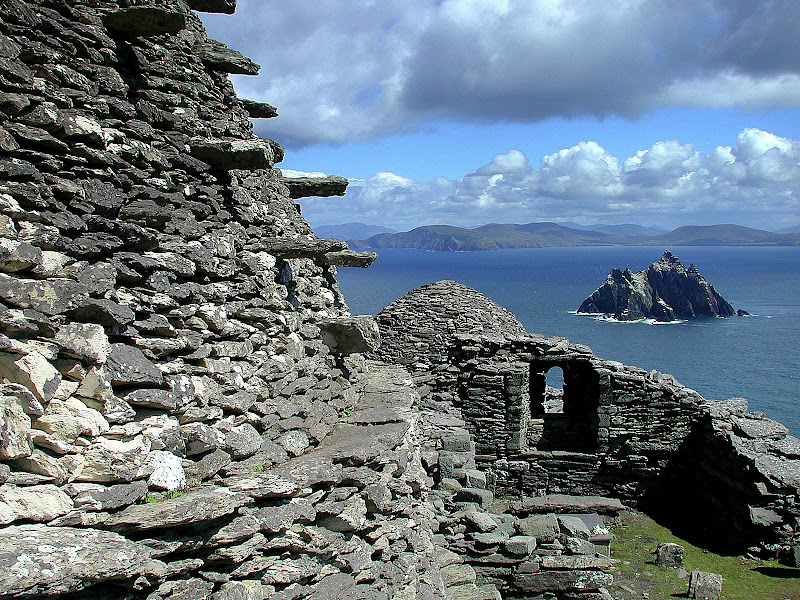
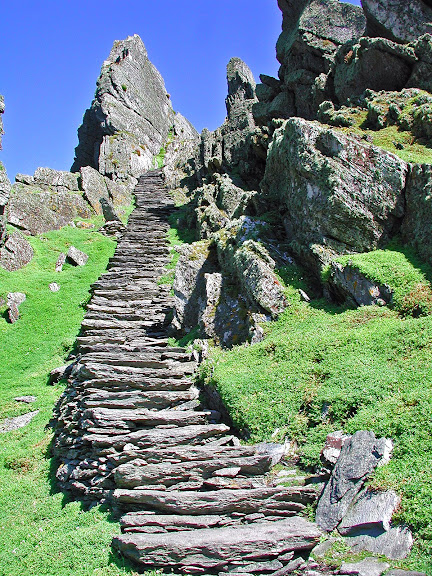
The Celtic monastery on Skellig Michael, Co Kerry, is a good subject for imaginative reflection.  Looking at the photographs questions such as 'Why was the monastery built here? What would life and faith have been like for the Irish Christian Monks who made their home here?' spring to mind. Of course the photographs also beg the question of gender exclusion: 'And what of the women's faith?' What does all of this say to you?


Thursday, 5 June 2008

Celtic Imagination No 4

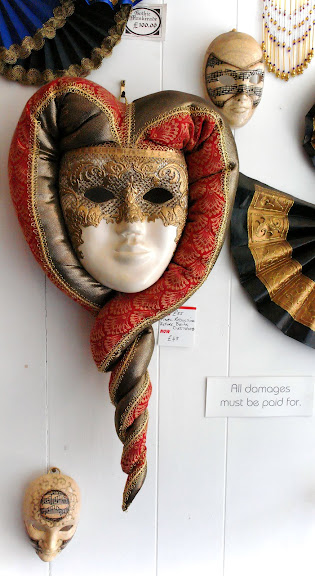
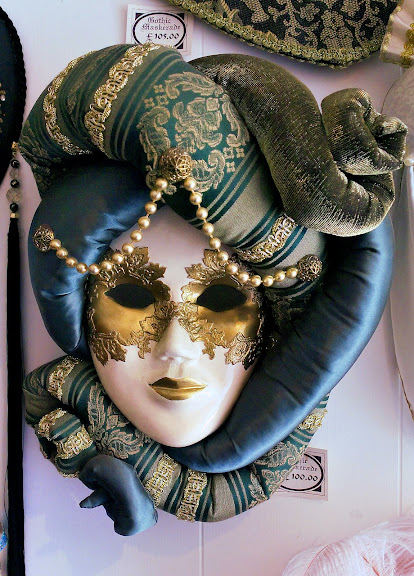
The theme of 'Masks' should stir-up our imaginations. What face do we show to the world? What is the truth behind the mask? How do others see us?

Decorative Masks, Castleton, Peak District

See this post for some thoughts arising from these images

Trapped: thoughts flowing from Celtic Imagination No 3

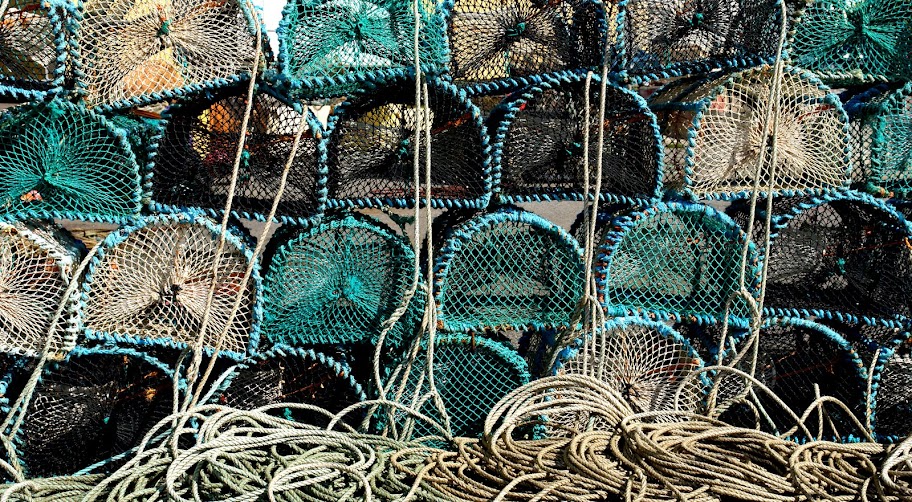
The image of lobster pots released a wellspring of reflection in my mind which I would like to share with you. In sitting with this image I was mindful that it is 200 years since the ‘Abolition of the Slave Trade’ Act. As we have recently bought the DVD of 'Amazing Grace' the life and faith-driven activism of William Wilberforce was fresh in my mind, hence the connection with the photo. I totally agree with the reviewer on Amazon who said of 'Amazing Grace', "I would place this film amongst the most powerful I have ever seen in a long life of cinema going." Its such a moving portrayal of what putting the kingdom of God into practice looks like and why, for Christians, inaction is not an option.

All of this led me to ponder the question, "who is trapped or enslaved today?" As I looked at the lobster pots three groups of people came into focus: migrant workers, prostitutes and people imprisoned and tortured for their political and religious beliefs.

In Lincolnshire our economy relies on migrant workers, with  peak demand for casual and temporary labour in South Lincolnshire and Boston reaching up to 15,000 migrant workers per day. Across the UK stories of how migrant workers are exploited and abused are all too common. Here in Lincolnshire we take a pro-active approach to these issues. Lincolnshire Chaplaincy Services employs a Migrant Workers Chaplain, who together with our Agricultural Chaplain (see Integration Lincolnshire), seek to address the main causes for concern. Local churches offer hospitality and seek to advocate the welfare and well-being of migrant workers in their communities, which for towns such as Boston is a pressing matter. We resolutely oppose racism in all its forms. What are the issues where you live? Who is trapped? Who is being exploited? What can you and your church do about it?

The second lobster pot group of people I thought about are those caught up in prostitution and sex-trafficking. David Cronenberg's powerful film 'Eastern Promises' deals with this. The media made much of a fight scene in a Turkish bathhouse involving the actor Viggo Mortensen naked.  The most chilling, provocative and harrowing scene in the film did not get a mention: that set in a brothel where a sex-trafficked Ukrainian woman is forced to have sex. Chaste (Churches Alert to Sex Trafficking Across Europe) is a very helpful resource for addressing the scandal of women trafficked and trapped in this way. Of course for many of the women trapped into street prostitution their plight is linked inextricably to drugs. Drug dealers and pimps enslave them. This video on Youtube shows the human face of this misery. It is so profoundly sad and almost unbearably moving. Each of these women is beloved and cherished by God, yet they are vilified and stigmatised by society in a way which traps them in a lobster-pot stereotype. How are they to know the love of God in a way which sets them free? What action can we take to support those who are vulnerable in this way?

The third group of lobster-pot people are the ones for whom Amnesty International exists, those imprisoned and tortured for their political and religious beliefs and actions. For a daily comment on what's in the news regarding human rights abuses take a look at this blog from the Amnesty International  UK media team. As Amnesty say of themselves: "We are ordinary people from around the world standing up for humanity and human rights. Our purpose is to protect individuals wherever justice, fairness, freedom and truth are denied."  This is something we can all get involved with.

So thinking about the theme of those who are trapped led me naturally to reflect upon the question, 'what can I do?' Channeling our righteous indignation and godly outrage is essential: as I have said before, being inactive is not an option for Christians.  Whatever lobster-pot people you thought about, there will be something you can do to set them free. For instance you could become a Backyard Abolitionist here in the UK, where you live and work, by taking to heart and putting into action the 'Not For Sale' campaign from the USA. Their blog flags up stories of local action from across the world. As they say:

"It is no longer enough to think about change.
It is no longer enough to talk about change.
It is time to shift gears; marrying movement with intelligent action.

Our collective challenge is simple, stand with those who are enslaved, work together to free them, and empower them in their freedom to break the cycle of vulnerability."

All of this from one picture of a row of lobster pots. Our imagination is a place where God can really get to work in our world.

Tuesday, 3 June 2008

Celtic Imagination No 3

A more challenging image this time. Perhaps this will trigger thoughts around what it is to be trapped or to be implicated as one who does the trapping, or maybe your imagination will stir around issues of oppression, exploitation or freedom. What might God have to say to you through the power of this image?

Lobster pots, Gairloch

Sunday, 1 June 2008

Celtic Imagination No 2

The second in a series of photographs to sit with and contemplate.

Hardraw Force, Yorkshire Dales

Saturday, 31 May 2008

Celtic Imagination No 1

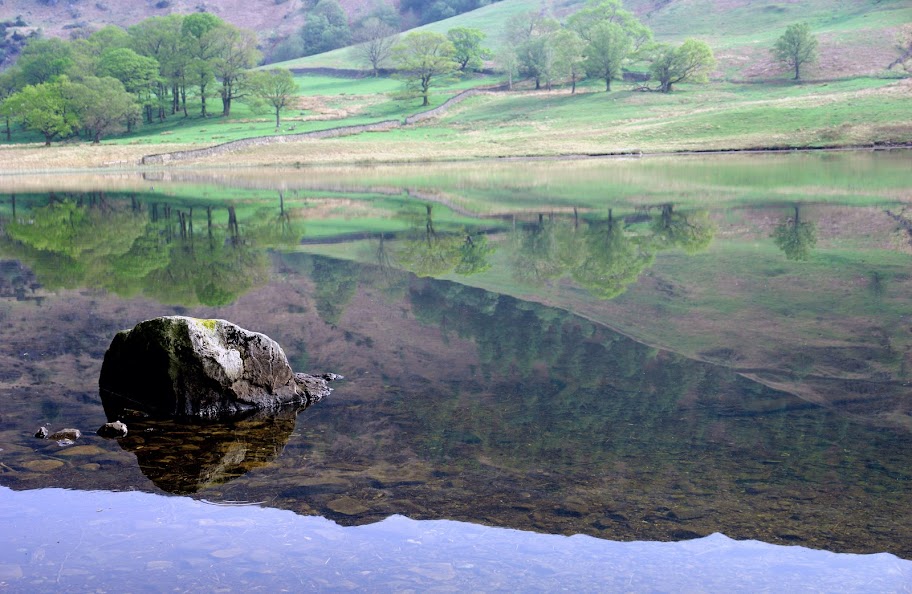
The first in a series of photographs to sit with and contemplate. In Celtic expressions of Christianity, God is to be encountered in all things. The world around us is profoundly sacred and through the openness of our creative imagination becomes a means of dialogue with God. Such a sacramental way of seeing is a gentle and reflective way of nurturing a more contemplative spirituality.

So what does this image say to you?

Blea Tarn, Lake District

Thursday, 29 May 2008

Opening up the wells

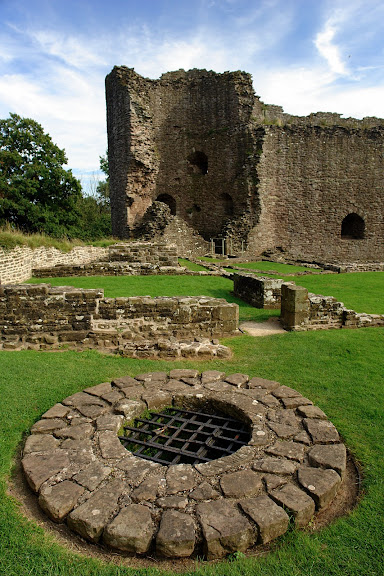
I took these photographs inside the magnificent ruins of the twelfth century White Castle, near Abergavenny in Monmouthshire. Walking around the site my attention was drawn to the old, disused well. As I drew closer I saw that it was padlocked. This striking image took hold in my imagination as a metaphor for how the church so often finds itself portrayed in popular culture today: a ruined relic of passing historical interest, having little contemporary relevance and still less to offer to thirsty souls, its wells long dry and closed up by the rational mind.

But are our wells dry? The bible offers an intriguing insight. In the book of Genesis there is a brief episode in the story of Isaac which speaks into our dilemma. As he journeys Isaac needs to find sources of water. The old wells dug by Abraham have been blocked up by the Philistines and are disused. In the face of this we are told that Isaac dug wells, or more specifically that he opened up the old wells and drew up water from the wellsprings which were still there.

In St.John's gospel this imagery finds fresh impetus in Jesus. Jesus memorably makes the relational link between our common thirst for meaning, purpose, hope and justice and the love which God offers through him and which flows abundantly through the presence of the Holy Spirit in our lives (see John 4:5-15; John 7:37-39). The wellspring is there, but it takes an act of faith and trust in order to unblock it and remove centuries of rationalistic rubble.

When I first became Chair of the Lincoln and Grimsby District we worked with the metaphor of church as a wellspring. Liz Smith, now Chair of the Leeds District, was instrumental in providing this powerful image of wells and wellsprings and of working through the implications for the church of using it. What we thought then is especially relevant now:

"What language and imagery will inspire and sustain a new vision of “church” for the present time? The image of Wellspring is proving extremely fruitful in our thinking. Wellsprings rise and bubble to the surface where they will, even in hard and stony places if there is a fissure beneath the surface.The Wellspring image frees us from always thinking of church in terms of buildings. A church building might be the focus of living water in a community, but such a wellspring may take many other forms. Access to the well must be free and open to all: it is a place of meeting, of sharing stories, it is essential to the life and well-being of the community. No single person is the source, yet together human beings in all their holy diversity become the wellspring to which others are drawn and become participants.Given that this is our vision of “church” we have been led to ask the further question: what kind of leadership qualities are compatible with the Wellsprings vision?

The most immediate response is that we do not need Well-masters! Wells imply a shared responsibility for keeping the well fresh, clear, unpolluted and inviting. Our vision therefore suggests a departure from styles of leadership that keep others in passive roles or squeeze them into permissible spaces. We suggest that the following qualities are those to which we should aspire: visionary, in partnership, enabling others, honest about our vulnerability and woundedness, decisive, passionate, journeying, laughing."

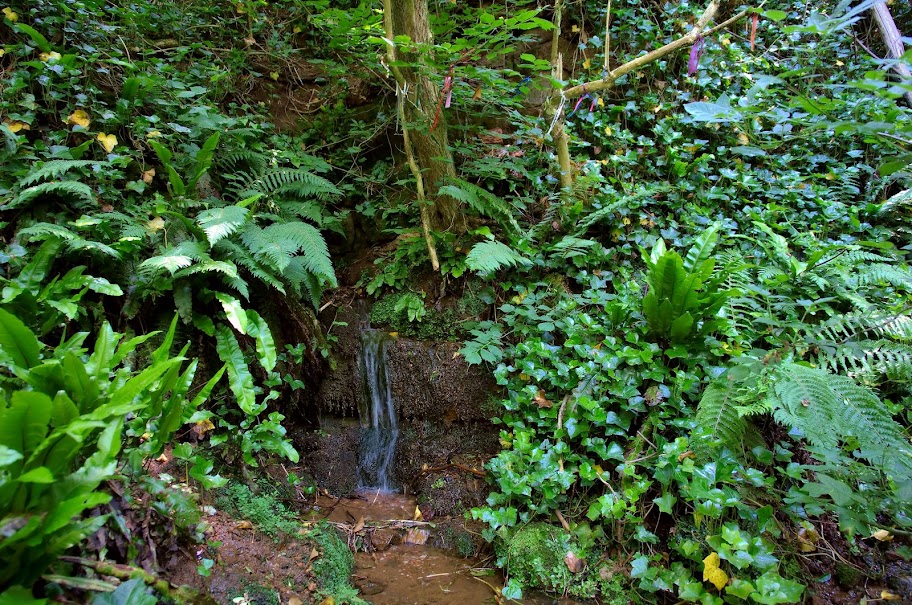
Natural Wellspring (Lud's Well, Stainton-le-Vale, Lincolnshire)

Wednesday, 28 May 2008

Godly insight

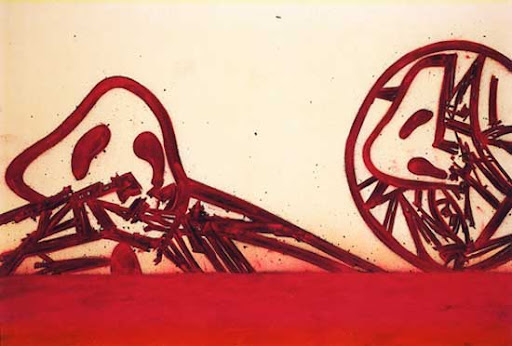
On our recent holiday in the Lake District we visited the Abbot Hall Gallery in Kendal. Two paintings in particular caught and held my attention. One was a portrait by Frank Auerbach. This was in his trademark heavy impasto, black and white paint being layered and scraped back until the end result was more like a three dimensional model of a ravaged landscape than a portrait in the traditional sense. It was simply spellbinding and, like the best poetry, conveyed a deeply felt truth about the human condition. The same was true when I sat in front of Tony Bevan's large canvas 'Horizon' (pictured here). This shows two abstract faces seen from unusual angles, the one on the right turned on its side. This is so very far removed from say, a nice neat photo of two people side-by-side; yet Bevan's canvas conveys something of the deeply complex reality which we know is there beneath the surface appearance of our humanity.

It is this same sense of recognition and making sense of the complex and chaotic experiences, feelings and thoughts of one's own life which I discovered through therapy about five years ago. Bevan's picture reminds me of what it is like to be me. And it is this me which I know God sees, and it is this me which God loves, something which I still find hard to take in, let alone accept. Yet it is true. Maybe this is why I have always been drawn to the story of Legion in the gospels. When asked for his name, this poor, tormented soul says "My name is Legion; for we are many." He is honest about the chaos and complexity of his being human. For me the story gives permission for us to be just as honest, indeed it encourages us to be so, if we are to be set free. Jesus says to the man who he has just healed, “Go home to your friends, and tell them how much the Lord has done for you, and what mercy he has shown you.” In my experience the church, like life, is full of Tony Bevan people. At our best we provide for one another a safe space where such Godly insight and honesty lets mercy do its healing work. It is not easy. It is vital that we are accompanied well. But it is possible. And it does happen. As for Legion, "And he went away and began to proclaim in the Decapolis how much Jesus had done for him; and everyone was amazed."

The miracle of grace is that Jesus still comes to meet us, calling us lovingly by our name and wanting so desperately to set us free. I know, because this is what he has done and continues to do for me too. So when we look at each other perhaps we might try to see with such godly insight and compassion.

Faith in Action

Inaction is not an option for Christians. The picture shows a clay model of a life-size bronze sculpture of a beggar by the American artist Timothy Schmalz. I have used it in worship to focus and ground our prayers for others because it is such a disturbing image. It challenges and unsettles because it demands a response from us. We have to choose. And we choose knowing that Jesus identifies himself with the beggar. The open outstretched palm is his.

Colossians ch.3 makes the point crystal clear: "So if you're serious about living this new resurrection life with Christ, act like it. Pursue the things over which Christ presides. Don't shuffle along, eyes to the ground, absorbed with the things right in front of you. Look up, and be alert to what is going on around Christ—that's where the action is. See things from his perspective." 

We are to see as Christ sees, to be attentive and alert to where he is active, to look at situations with a resurrection perspective. This also means looking up at ourselves with the eyes of the beggar and seeing things from their perspective too. All of this is why inaction is not an option for Christians.

The Earthquake in China and the Cyclone in Myanmar are powerful reminders of the ever-present challenge of this image and of the fragility of life. The Generals in Myanmar sat on their hands and watched their people die, when the global community was ready and waiting to respond. The worsening global food crisis is punishing the poor worldwide. The credit crunch has added untold misery to the lives of millions. Soaring energy prices compound the distress. Climate change is already hitting the poorest and most vulnerable people across the planet. Inaction is not an option for Christians.

If you want examples from history, how about these for starters: St Aidan is given a fine horse by King Oswin, and promptly gives it to the first beggar he meets. St Francis embraces a leper, St Martin shares his cloak with a beggar. Timothy Schmalz's sculpture gets to the heart of what was going on in these encounters; they met Christ face to face.

And what of today? Brian MacLaren's new book Everything Must Change: Jesus, Global Crises, and a Revolution of Hope is a superb read for all of us who wish to be challenged to put faith into action in a way that gets to grips with these global crises. Take a look at the video. Get the book. Put your faith into action where you are. Go to where the vulnerable and needy stretch out their hands and that is where you will meet Jesus.

A Word in Time

I'm sorry for the lack of action here on my blog. A combination of holidays, being frantically busy and latterly being unwell have put things at a standstill, so its good to resume our journey together. If you are looking for a source of daily bible-based inspiration have a look at A Word in Time on the the Methodist Church website. Each week there are daily themed bible studies and questions to ponder. As it happens I have contributed the material for this week - The Compassion of God - which is a prime example of why this blog was inactive. So it is good to be back!

Tuesday, 12 February 2008

Through Lent with Jesus: temptation and the wilderness

Getting our journey through Lent right takes some doing, but if we make the effort it is just possible that we will discover the secret to transforming the world in which we live. This has nothing to do with giving up chocolate, or anything else for that matter, but everything to do with facing up to our deepest desires and psychological drivers. It is about a difficult and demanding journey into the wild places of just who and how we are. Before his public ministry begins Jesus goes away into the desert wilderness. More than this, we are told that he is compelled by the Spirit of God to undertake this hazardous 40 day retreat. This part of the Judaean landscape near Jericho was inhospitable, dangerous and an unsettling place to be. As such, it was an appropriate setting for what God intended and a near perfect metaphor for what ensued.  There in the physical wilderness Jesus confronts the wild-place of life and self and discovers three things: he discovers himself, the reality of God's enfolding and uplifting presence, and trust in the living truths of that relationship as recounted in scripture.

In his book "Invitation to Love: The Way of Christian Contemplation", Fr.Thomas Keating explores how we can face up to, live with and grow through our own hidden motivations. In Keating's view, failure to come to terms with "our false self - our injured, compensatory sense of who we are" is one the biggest impediments to our spiritual growth. Referring to Jesus struggle in the wilderness he says that "Lent is our battle with the same temptations. The biblical desert symbolizes the confrontation with the false self and interior purification. Jesus was tempted regarding each one of the instinctual needs. He did not consent to them while yet experiencing them in their utmost intensity." These instinctual drivers are our need for survival/security, affection/esteem, and power/control, and they are mirrored in the three temptations which Jesus endures as he discovers his authentic self. In each instance Jesus turns to the deep, personal truths of scripture upon which his faith community has relied down the centuries. There in the desert, beset by the wildness and desolation of what it is to be a human person like you and me, he discovers them as his own truth. And as he does he suddenly knows the presence of God cradling, enfolding and uplifting him.

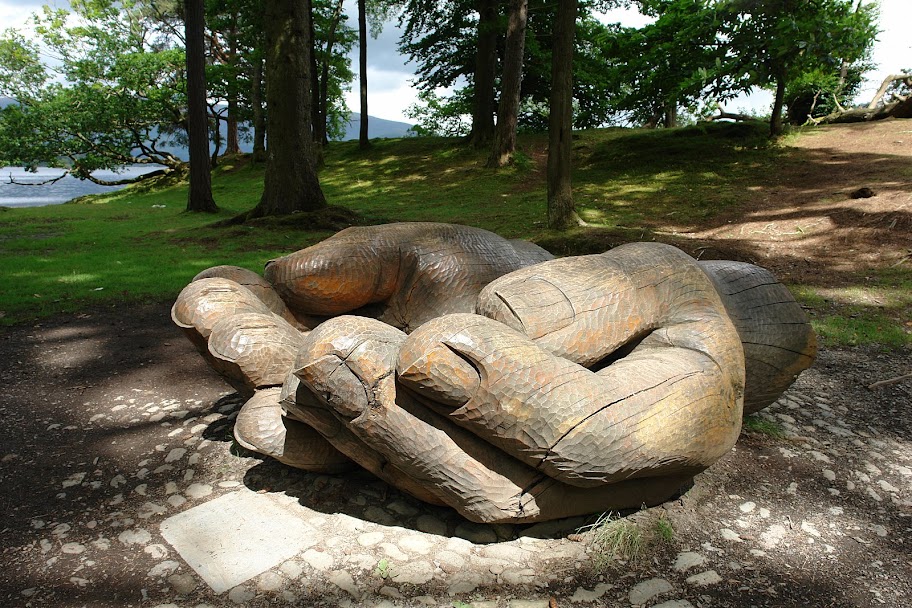
Walking around the shore of Derwentwater last year we suddenly came upon this huge carving of a pair of cupped hands. Nestling in the landscape, it is a very gentle piece, one which invites you to stay and ponder its meaning.  Especially, perhaps, the unspoken invitation is to reflect upon just what in one's own life one would wish to place into the safe welcoming space of these offered hands. In my mind I link this image with the temptation narrative. Far from the clenched fist of a punitive God, as we see with Jesus in the desert, God's response to our all too human struggles with ourselves is to offer strong yet gentle hands to hold us and our hurting whilst we become in love who we truly are in God's sight.

In the journey of faith this is something we have to experience for ourselves, as the Spirit compels us to discover truth in our wild places. And if it is true that we change the world by first changing ourselves, then this journey into Lent is hugely significant, because human need for survival/security, affection/esteem, and power/control can so easily lead to the behaviours which bedevil our world. The tempestuous reaction to the typically detailed and elaborate musings of Archbishop Rowan Williams on Sharia Law and the rights of religious groups to express their identities in an increasingly secular state, is a case in point. Where is all this anger rooted? Of what, and more pointedly, of whom are we afraid and why, and is this rational? Deep and powerful forces were so easily unleashed by his words: the real fear is how such reactions have so often been manipulated to scapegoat groups, races and nations and to dehumanise individuals.

During Lent our calling is to engage afresh with the struggle to be real, authentic disciples; this leads us inevitably to the wilderness of the false self and the power of God to make us whole. Maybe in his own struggle in the desert Jesus was encouraged by the story of Moses and the burning bush. We recall how Moses was a man on the run, a murderer whose life was an utter mess. In the desert, beset by a wild place of his own making, he was surprised by God.  Moses realised that far from being alienated from God, the place where he stood in all his mess and muddle was truly holy ground. God was there. And there in love for him.

As we face up to our own false self this Lent God is there for us too. Not with a clenched fist, but with open hands. The burning bush of unconditional love is our truth, yours and mine. We need not be afraid, for as Julian of Norwich knew, in our wilderness experience God's truth says to us: "

You will not be overcome.
God did not say you will not be troubled,
You will not be belaboured,
You will not be disquieted;
But God said, You will not be overcome